Understanding Your Meter Read Date & Why It’s Important
Knowing when your irrigation meter is read can help you better manage your power bill and make informed decisions about when and how you operate your pumps. Your automated meter records two key measurements for each billing month: the total volume of energy used (kilowatt-hours, or kWh) and the average highest level of demand in a 15-minute period reached at any point during the month (kilowatts, or kW). That highest average 15-minute demand becomes your demand charge during irrigation season.
For all Idaho irrigation customers, in-season rates begin at 12:00 a.m. on June 1 and continue through September 30. Out-of-season rates begin at 12:00 a.m. on October 1 and run through May 31.
Irrigation Billing Changes Beginning in 2026 for Idaho Irrigation Customers
Idaho Power is moving all Idaho irrigation customers (schedules 24 and 84) to a standard calendar‑month billing schedule. Oregon customers will remain on a cycle read billing schedule. (See Oregon section for additional details.)
Today, irrigation customers are billed on different meter‑read cycles. Those cycles can vary in length and may shift slightly from year to year. Some customers have told us this can be confusing and make it harder to track monthly usage, demand, and costs.
In response to that feedback, and in coordination with the Idaho Public Utilities Commission (IPUC), Idaho Power is transitioning all Idaho irrigation customers to a consistent, calendar‑month billing schedule.
What is Calendar-Month Billing?
With calendar‑month billing:
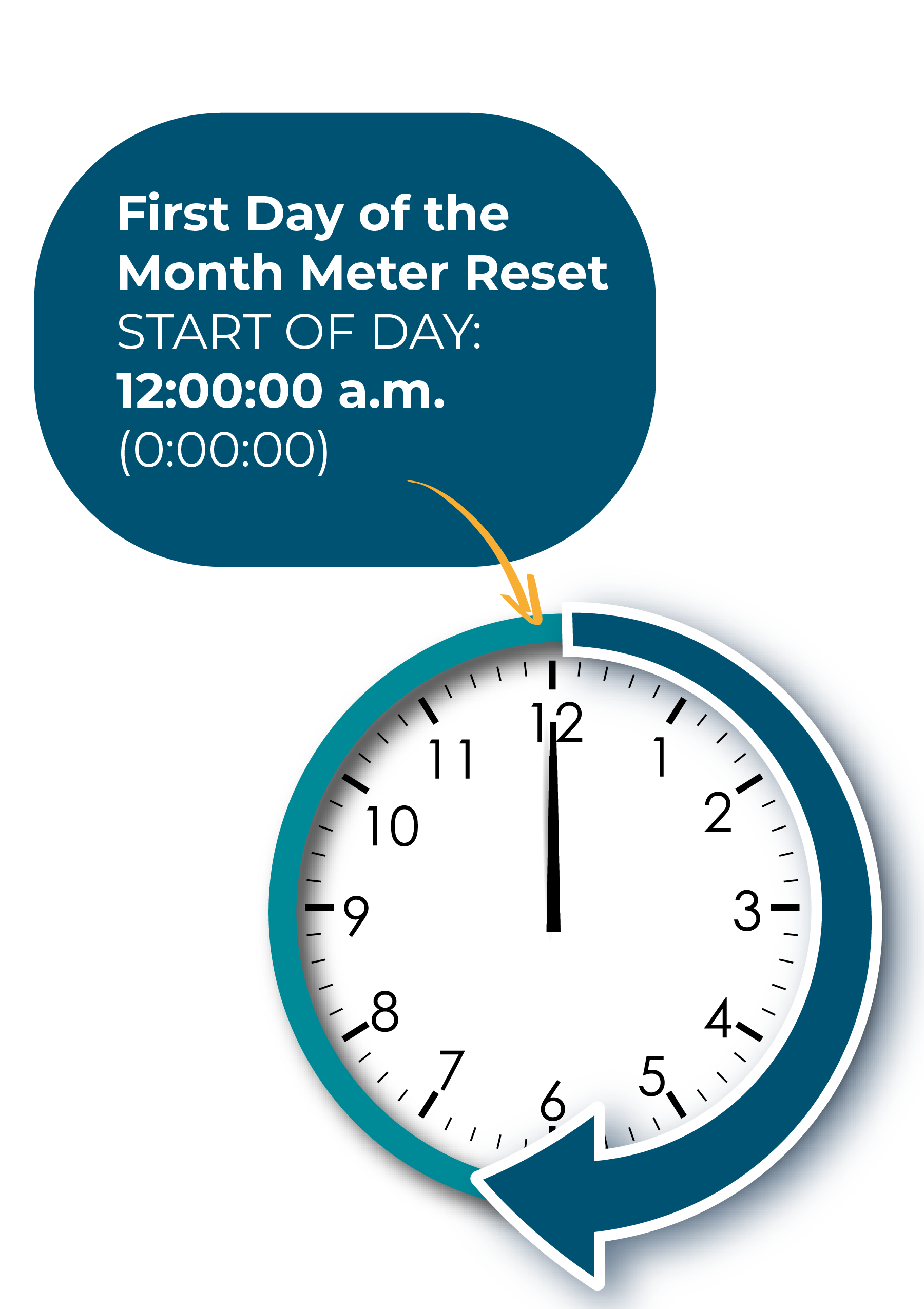
- Irrigation usage and demand charges will be billed from 12:00 a.m. on the first day of each month through 11:59 p.m. on the last day of that same month.
- Customers will receive their bills at a similar time frame as before. Bills are now issued the month after usage occurs. For example, all energy use and demand recorded during the month of June will appear on a bill sent in July.
Will This Change the Demand Season?
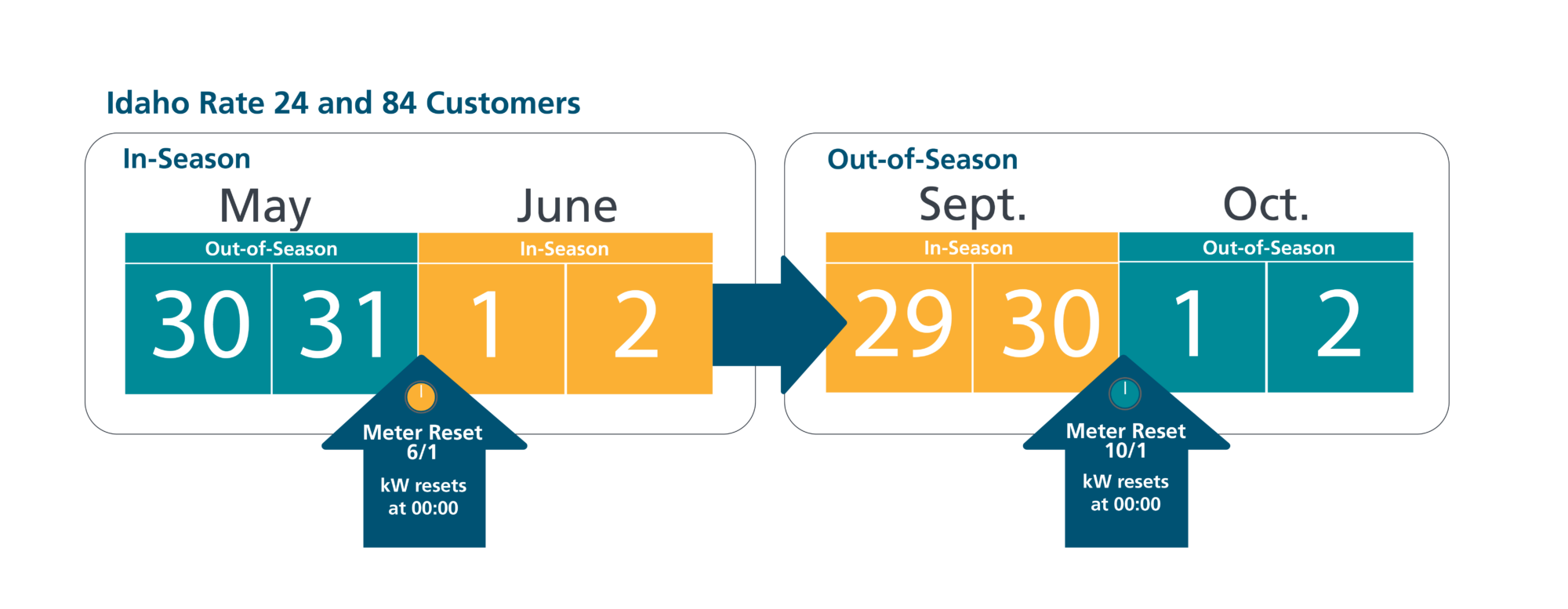
- Yes, in-season and out-of-season irrigation date ranges are changing. For all Idaho irrigation customers in-season rates begin at 12:00 a.m. on June 1 and end at 11:59 p.m. on Sept. 30 and include both an energy (kilowatt-hours [kWh]) and a demand charge (kilowatts [kW]).
- Out-of-season rates run from Oct. 1 through May 31 and do not include a demand charge.
One-Time Transition to Calendar Billing
To move all Idaho irrigation customers onto the same calendar‑month schedule, Idaho Power will make a one‑time billing transition between April and May 2026.
Because customers are currently on different billing cycles, some accounts will have a shorter or slightly longer billing period during their April or May bills.
This is a one‑time adjustment. By June 2026, all irrigation customers will be fully aligned on calendar‑month billing.
Why Your April or May Bill Looks Different
If your April bill is shorter, this is expected during the transition and does not mean you were underbilled.
What you see on your bill depends on your current billing cycle.
Metered services on Cycles 1–4
If your irrigation service is currently on billing cycles 1–4, your April bill will cover fewer days than usual as we move your account to the new calendar schedule.
For all other metered services on Cycles 5-21
You can expect minimal impacts to your April and May bills.
If you have specific questions about your own billing cycle, please contact your Idaho Power Agricultural Representative or Customer Service (1-800-488-6151).
In-Season and Out-of-Season Rates – Idaho Customers
In-season rates will begin at 12:00 a.m. on June 1 and end at 11:59 p.m. on September 30. During this period, irrigation accounts include both an energy charge (kilowatt-hours, or kWh) and a demand charge (kilowatts, or kW).
Out-of-season rates begin at 12:00 a.m. on October 1 and continue through May 31. Out-of-season bills do not include a demand charge.
In-Season and Out-of-Season Rates – Oregon Customers
All Oregon irrigation customers (Rate Schedule 24 and 84) will not transition to calendar billing and will remain on a billing cycle schedule. The in-season rates begin with the customer’s meter reading for the May billing cycle and end with the customer’s meter reading for the September billing cycle. Read dates are determined by that service point’s billing cycle and can vary from year to year. For the 2026 Oregon Irrigation Demand In-Season Card, click here.
Why Does Idaho Power Have a Demand (kW) Charge?
Demand charges collect a portion of the fixed cost required to serve the size of the connected irrigation load. Because irrigation pumps often operate during periods of high summer demand, the electric system must be built to reliably meet those peak conditions. Demand charges help fairly allocate the cost of building and maintaining that infrastructure.
Managing pump size, operating schedules, and overall system efficiency can help improve load factor and reduce the impact of demand charges. Please visit Irrigation Efficiency Rewards to learn more about incentive programs or contact your local Ag Rep at Agriculture Representatives – Idaho Power to evaluate your system and help identify efficiency opportunities.
On-Site Generation Customers In- and Out-of-Season
Oregon Rate Schedule 84, Net Billing Customers
On-site generation tariffs provide Idaho Power customers with on-site generation the ability to offset some or all of their energy needs. There is a 24-hour delay for Net Billing Customers. For more information on Legacy vs Non-Legacy Systems, visit idahopower.com/customergeneration.
Additional Resources
- Current Rates for Idaho Customers
- Current Rates for Oregon Customers
- Information on how to understand your bill
For assistance with a PDF on this page or to request a PDF in an alternate format, please contact Customer Service at 208-388-2323 or 1-800-488-6151