Outage Center
Current Outages
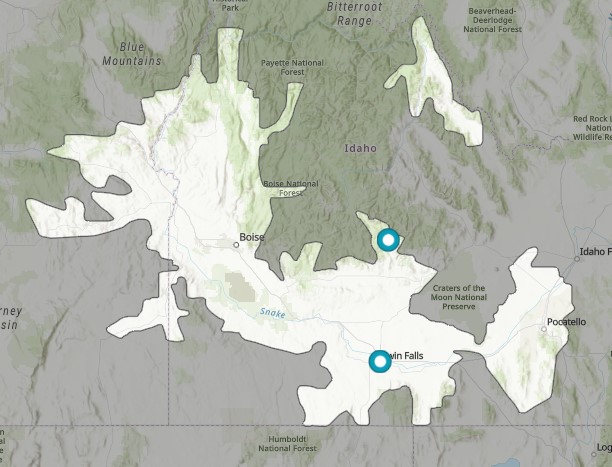
Report an Outage
- 208-388-2323
- 1-800-488-6151 toll-free
(oprime 5 para español)
If you see a downed power line, stay as far away as possible — at least 100 feet — and call 911. See other safety tips below.
 What to Do if Your Power Goes Out
1. Look around your house.
Are all areas of your house without power? If some are still on, check your breaker box for issues. Keep your fridge door closed to conserve energy!
2. Check our outage map.
View our online outage map to see if we are aware of your power outage. It could take up to 10 minutes for your outage to display, and outages affecting less than 10 customers are not shown.
3. Report the outage.
Don’t see your outage on our map after 10 minutes? Call us to report it at 208-388-2323 or 1-800-488-6151 toll-free.
4. Stay safe.
Turn off electric ranges and space heaters to help prevent a fire if you’re away when power is restored, and use battery-powered lights instead of candles. Use generators in open, well-ventilated areas. Learn more about generator safety.
How You can Prepare for Power Outages
Know how to get updates when an outage happens.
Make sure you’re ready for any length of outage, with any unique needs in mind.
Use our list to gather everything you need ahead of time.
Medical Needs
Review our outage preparedness and response recommendations for vulnerable populations, such as those requiring refrigerated medication or life-support systems.
Critical Facility
We have extra preparedness tips for critical facilities — such as hospitals, gas stations, sewer plants, and police and fire stations — so they can focus on providing essential services.
Why Are There Outages?
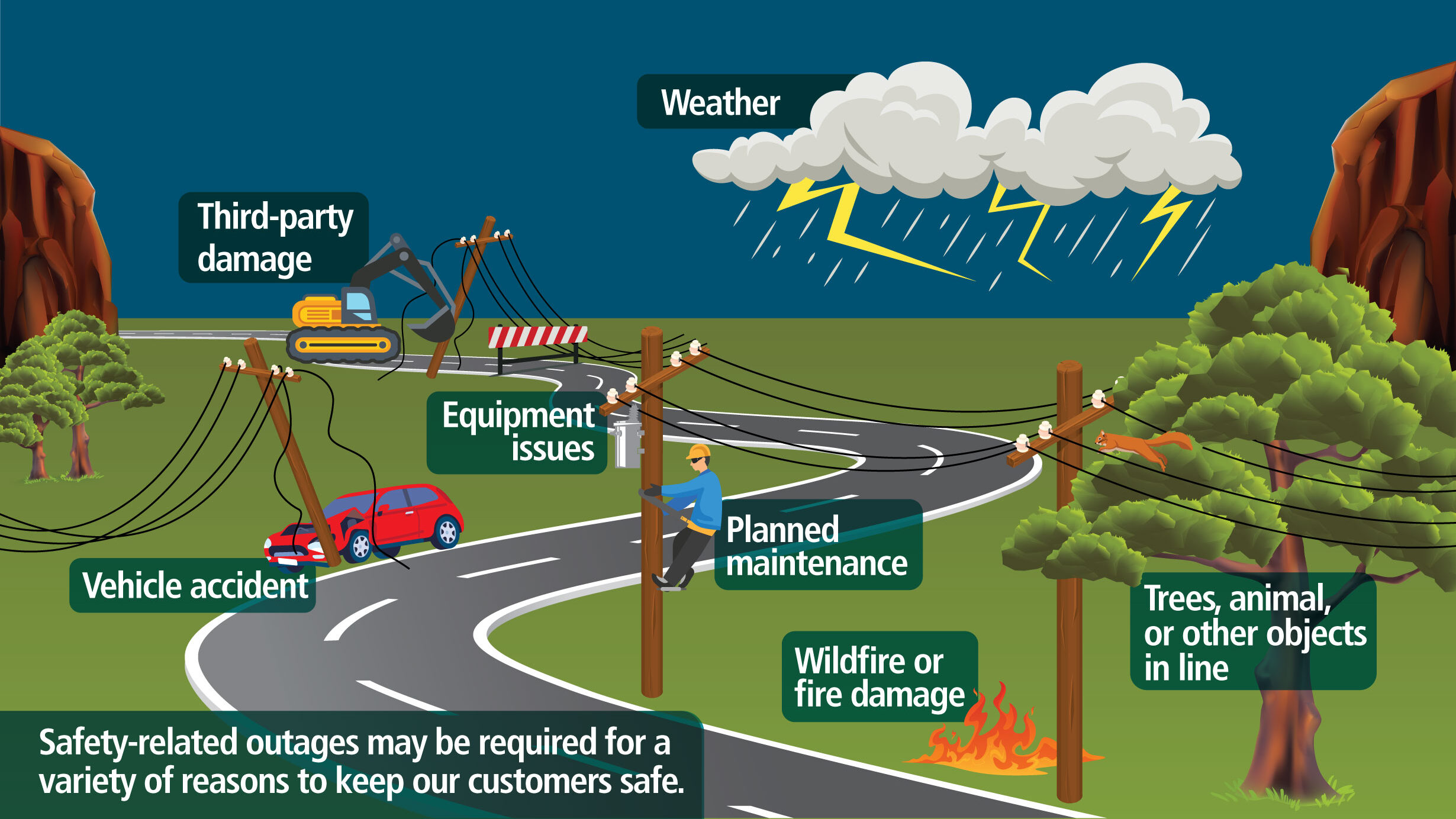
There are several reasons power could go out. This graphic shows some of the most common causes, like weather.
How We Restore Power
Our crews work 24/7 — through rain, shine, or snowstorms — to ensure customers have the power they need. Here’s how.
- Idaho Power’s highest priority is to address hazardous situations, such as downed power lines.
- Our crews then focus on restoring power to customers and critical facilities, such as hospitals and police and fire departments.
- As we restore power, different parts of a neighborhood may be on different circuits and may be restored at different times.
- Our crews won’t stop until all customers are restored. If you receive an alert that your power has been restored but you are still without power, let us know by calling 208-388-2323 or 1-800-488-6151 toll-free.



Frequently Asked Questions
Outage Restoration
How do I know Idaho Power is aware my power is out and working to restore it?
Primary account holders with a mobile phone number on file will automatically receive text alerts when an outage affects their account. Make sure your contact information is up to date and add additional contacts in My Account. You can also manage your outage alert preferences on the Outage Alerts page.
Other easy ways to view or receive outage information are the following:
- Visit our online outage map.
- Download the Idaho Power mobile app, available through the Apple Store and Google Play, to receive outage information specific to your home or business. The app will tell you if we know your power is out and the estimated restoration time. It also features an in-app outage map that displays all outages of 10 or more customers in our service area.
- Call 208-388-2323 or 1-800-488-6151 toll-free.
If your power has been out for over 10 minutes and is not reflected in the app or on the outage map, please call to report it so we can work to restore your power. When you call to do so, our Customer Care Team will ask the following:
- Your name, your business’ name (if applicable), address, and telephone number
- The approximate time power was interrupted
- If the entire area is without power, or just your business or home
- If you saw or heard anything unusual when the power went out
- If you can see any power lines on the ground
If there are lines on the ground, stay as far away as possible but at least 100 feet. Assume the lines are energized and dangerous.
In what order is power restored?
Idaho Power’s highest priority is to address hazardous situations, such as downed power lines. Our crews then focus on restoring power to customers and critical facilities, such as hospitals and police and fire departments. As we restore power, different parts of a neighborhood may be on different circuits and may be restored at different times (see question below.)
Could one customer’s power be out but a neighbor across the street still has power?
Yes. It’s possible for neighbors to be on different feeders. A feeder is an overhead or underground electrical line that supplies power to a group of customers within a given geographical area. Feeders do not necessarily align with streets, neighborhoods, or community boundaries. Two different feeders could easily serve one street. A feeder can serve up to 2,000 customers.
How can I get more information about outages?
In the mobile app or on our online outage map, you can view when an outage started, the number of customers impacted, the probable cause, status of the outage, and an estimated restoration time. Outage conditions can change, so check the map for updates as new information is received from crews on site. You can also get this information by calling 208-388-2323 or 1-800-488-6151 toll-free.
From the online outage map, you can also sign up to receive text alerts about a specific outage. Primary account holders with a mobile phone number on file will automatically receive text alerts when an outage affects their account. Make sure your contact information is up to date and add additional contacts in My Account. You can also manage your outage alert preferences on the Outage Alerts page.
Why do you sometimes not know the cause of an outage?
The power grid is complex and our lines and equipment span thousands of miles. Many things that cause a line to trip (like a breaker trips at your house) leave little to no evidence behind. When the cause is obvious, like a vehicle accident or an object in the line, we do our best to provide a suspected cause. However, our focus is always safety first with an emphasis on restoration as quickly and safely as possible — so if the cause is not immediately clear, you may see a cause of “Under Investigation” or “Not Found” as we prioritize getting the power back on.
Safety Information
Can I use a generator during an outage?
If you have a portable generator, never attempt to connect it to house wiring or plug it into an outlet unless proper transfer equipment has been installed by a qualified professional. Improper use can create dangerous electrical conditions and damage property. Instead, you may temporarily power an appliance during an outage by plugging it directly into the generator. Always use generators in well-ventilated areas, and make sure the total electric load on your generator won’t exceed the generator’s rating.
For additional information, check out our Using Portable Generators Safely brochure.
Is it safe to drive in outage areas?
Areas with power outages may have traffic lights that aren’t working or downed power lines. That’s why we advise to keep driving to a minimum in these areas. If you do encounter traffic lights that are out, treat the intersections as four-way stops.
If you encounter a downed power line while driving, always assume it has energy running through it and stay as far away as possible — at least 100 feet. Find out more about what to do around downed power lines and if one falls on your vehicle.
Protecting Your Belongings
How can I protect my appliances and equipment during an outage?
Plugging sensitive equipment like expensive electronics into a high-quality surge suppressor is an inexpensive way to help protect equipment from power surges and may help extend the life of your equipment. Learn more about how to choose a surge suppressor.
You can protect other equipment (like household appliances) by unplugging them or shutting off the circuit breakers until power is restored. We suggest leaving one light on so you’ll know when power has been restored.
After power has been restored for about 10 minutes, turn equipment back on in phases by energizing one breaker or fuse (or large piece of equipment) at a time and ensuring the equipment is working before moving to the next breaker or fuse. This provides additional protection for your equipment.
How can I keep my food from spoiling during an outage?
By keeping the doors closed on your fridge or freezer, you can maintain cool temperatures for several hours. We also recommend keeping a large block of ice in your freezer to help keep things cold. Learn more about food safety during a power outage from the CDC’s food safety website.
For assistance with a PDF on this page or to request a PDF in an alternate format, please contact Customer Service at 208-388-2323 or 1-800-488-6151